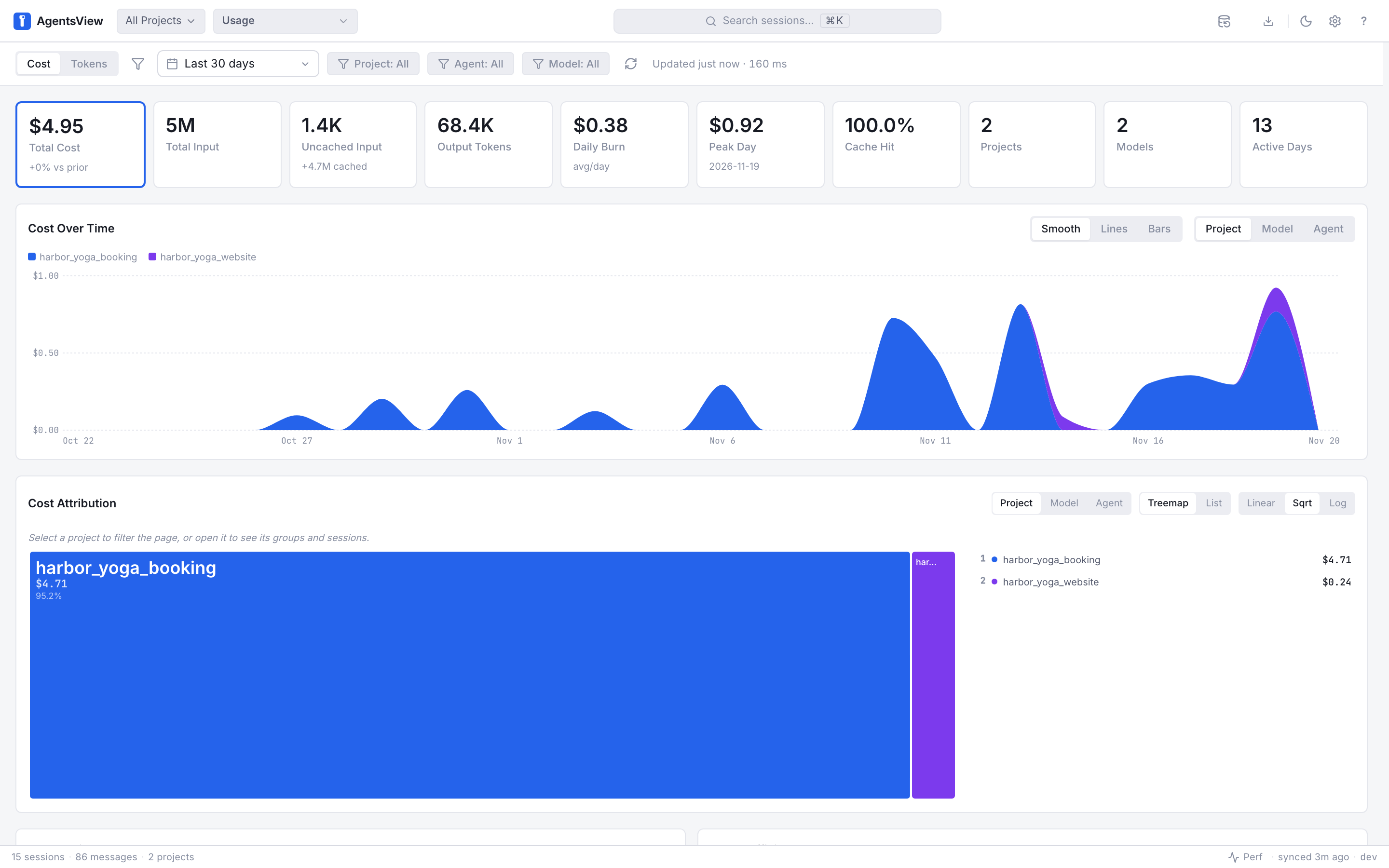
What it does
The original project belongs to its authors. What is described here is what Maxwell's version adds: eight packages of his own (duckdb, fleet, modelwork, msgnum, procspawn, sessionread, sorting and supervisor) and two programs (cmd/slice and cmd/supervisor), plus changes across the rest.
Memory for every agent
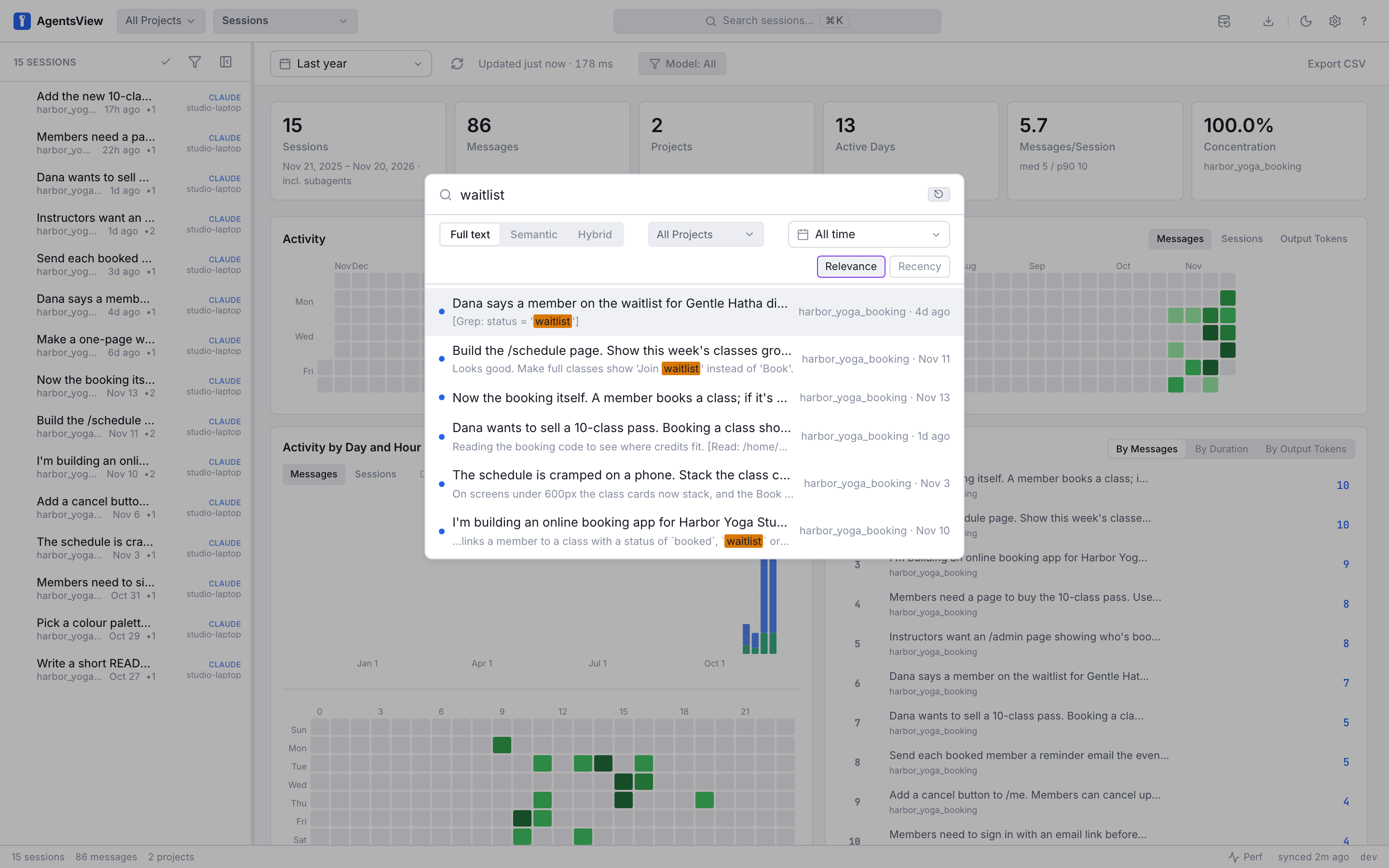
- Search by meaning, by exact words, and by file, command or error across every session in the record. Every agent searches it before continuing earlier work, so a decision made weeks ago is found rather than reopened.
- About 19 tools for agents over the Model Context Protocol, among them
search_sessions,search_content,query_recall,get_messages,get_friction_digest,get_quality_signalsandget_activity_report. - "As read."
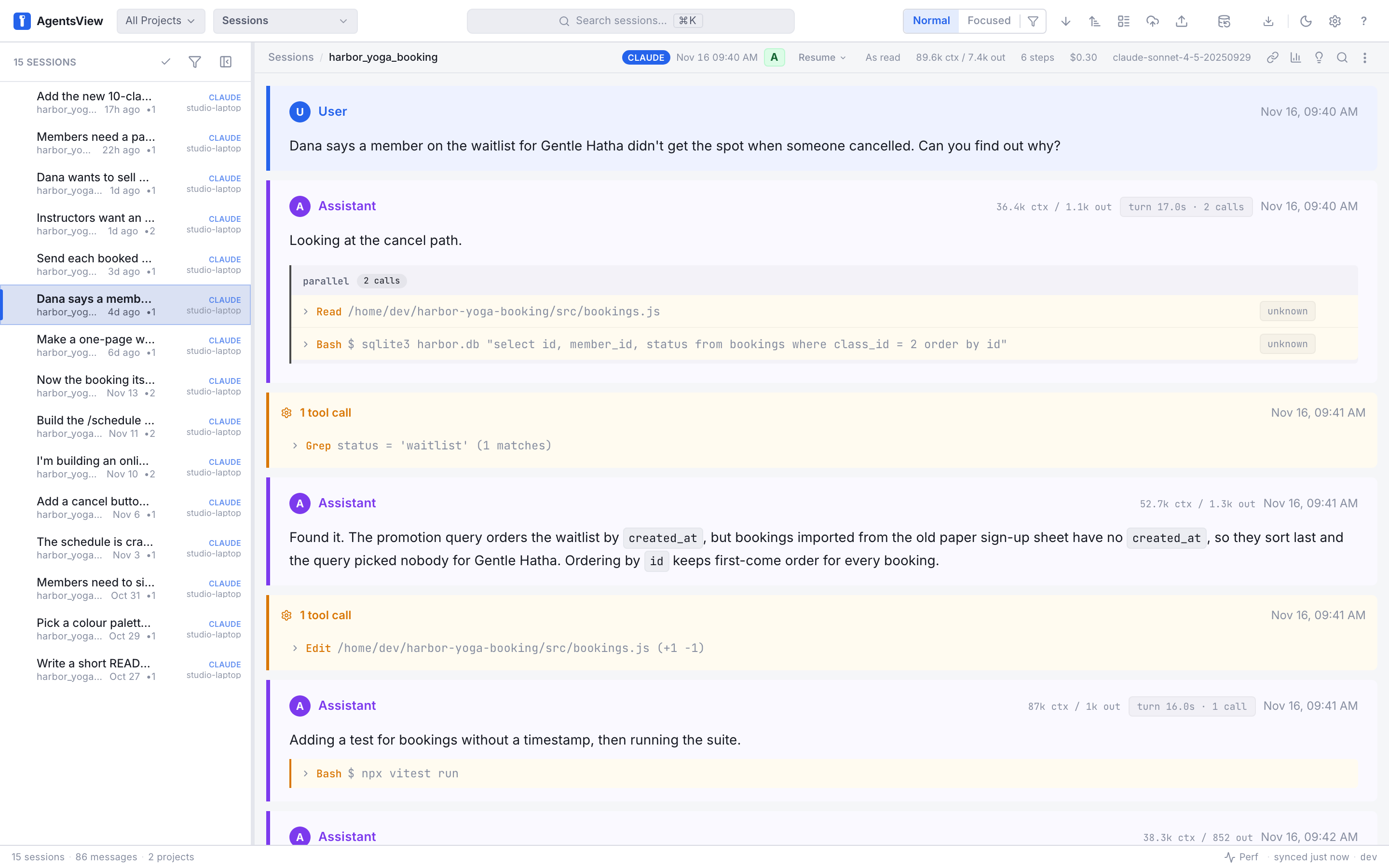
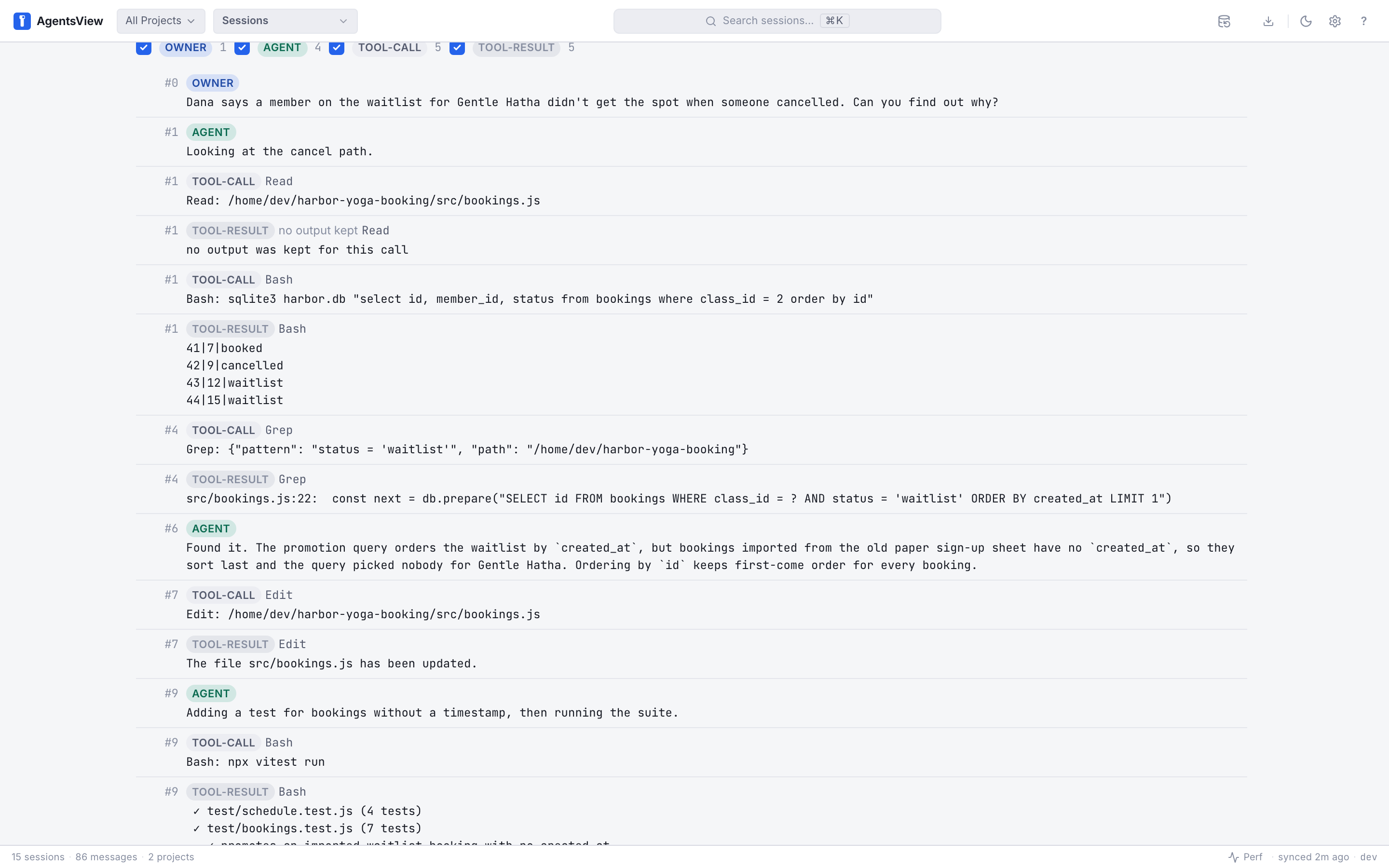
agentsview session read <id>shows a session the way a person reads it, with every line labeled by who said it. It reads the longest session in the record, 9,243 messages, in 0.49 seconds. - Stable message numbers. 750,418 message numbers are bound in a ledger, so every citation, link and export points at a message by number and keeps pointing at the same message.
- "Done" from the records. Whether work was done is read from what the sessions show, not from what an agent said about itself.
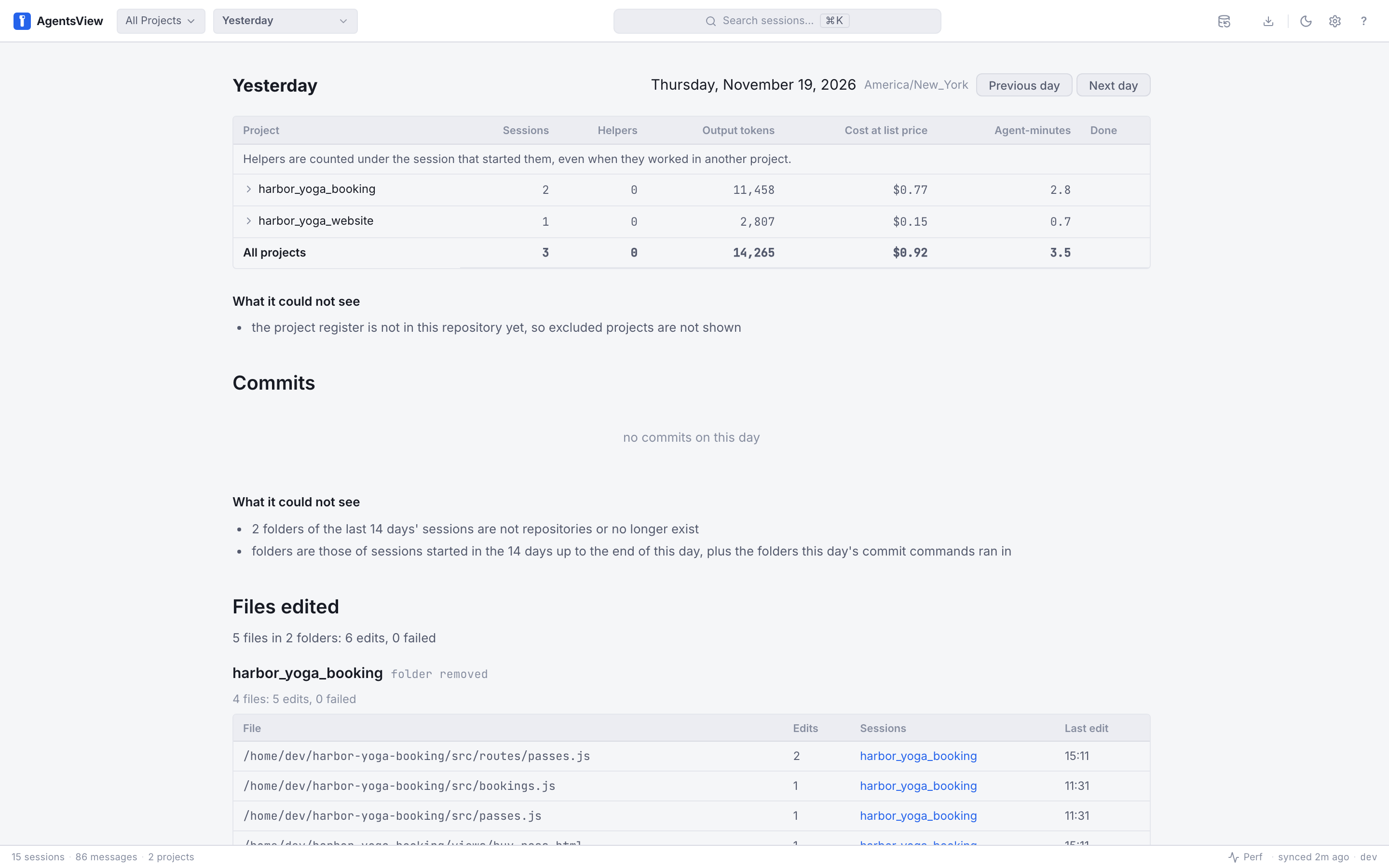
The Yesterday page: the whole fleet's day
Built in seven slices, it reports for the previous day:
- Sessions and helpers, with tokens, list-price cost, agent-minutes, and a line naming what the report could not see.
- Commits on every branch, each linked to the session that made it or marked unattributed.
- Files edited, pushes to main, and pull requests merged or closed.
- Tests run, sorted into passed, failed and unknown.
- Interruptions and refused tool uses.
- Effort set against shipped work.
The Systems index and git inventory
- Systems.
agentsview fleet systems, a Systems page and an API group sessions by the system they built, with goal labels across 316 systems. - Git inventory.
agentsview fleet gitlists every repository store, checkout and ref on the machine.
An archive that cannot be lost
- Every erase path closed and tested, so no update or sync can delete history.
- Backups with a proven restore. A full rebuild check recovered every session and message on record, confirming the restore path end to end.
- A rep-store collector that keeps owner-rep's records and drafted messages beside the sessions they came from.
A service, a login and a desktop app
- Always on. The server runs continuously and requires its own login (requests without a token are refused), behind a second access layer at a public address so he can reach it from anywhere.
- His own desktop app, built from the same binary, with no self-updater, opening already signed in.
- Weekly upstream updates. A scheduled job merges the original project's changes through a pull request and starts an agent to resolve any conflicts.
One scheduler and a supervisor
- One scheduler and one budget for model work, so summaries and analyses run in order and within a spending limit.
- The supervisor runs jobs and texts the owner's phone when one needs a decision; he answers yes, retry or skip by reply, and he gets a daily summary. Ten planted failures prove it catches and reports each kind.
What it achieved
- 15,999 sessions in the record, 4,760 started by Maxwell and 11,239 run by agents his sessions dispatched, holding 721,295 messages, 34,103 of them typed by him, across 140 projects.
- 2,914 commits past the original, 2,894 by him.
- 51,683 lines of application code and 56,498 lines of tests added, in 592 changed or added files.
- A spec folder of more than 109 numbered decisions records why each part works the way it does.
- Every agent on his machine starts with the record: an agent can recover a decision and the conversation around it instead of asking him again.
The problem it solves
Every AI session starts knowing nothing. Whatever was explained, decided or ruled out in an earlier session is lost unless the next agent can find it. Without that, the owner repeats himself, a settled decision is quietly reopened, and notes agents leave behind drift from what was actually said. The original tool's own retention erases old sessions, which is why archive safety was among the first things he built.
A plain session viewer shows one conversation at a time. Running a fleet of agents needs more: search across all of it, a daily account of what the fleet did and shipped, a stable way to cite any message, and a record nobody can erase.
How he built it
- Rules written down. The record is pulled, never pushed. A guard may block an action, but nothing may quietly inform an agent's judgment. Whoever does the work never writes the record of it. It is the agents' memory first and the owner's view second.
- The record is the word-for-word source. Notes agents leave behind are checked against it, never the other way round.
- Numbered decisions. Each design choice is a numbered decision in the spec folder, from 0001 upward, so later agents build on settled ground.
- Tests heavier than code. 56,498 lines of tests against 51,683 lines of application code, with planted failures for the supervisor and a full rebuild check for the archive.
- A private copy that keeps pace. His repository takes the original project's updates weekly through a reviewed merge, so his additions stay current.
- Maxwell built it by directing AI agents, and those agents use it as their memory.